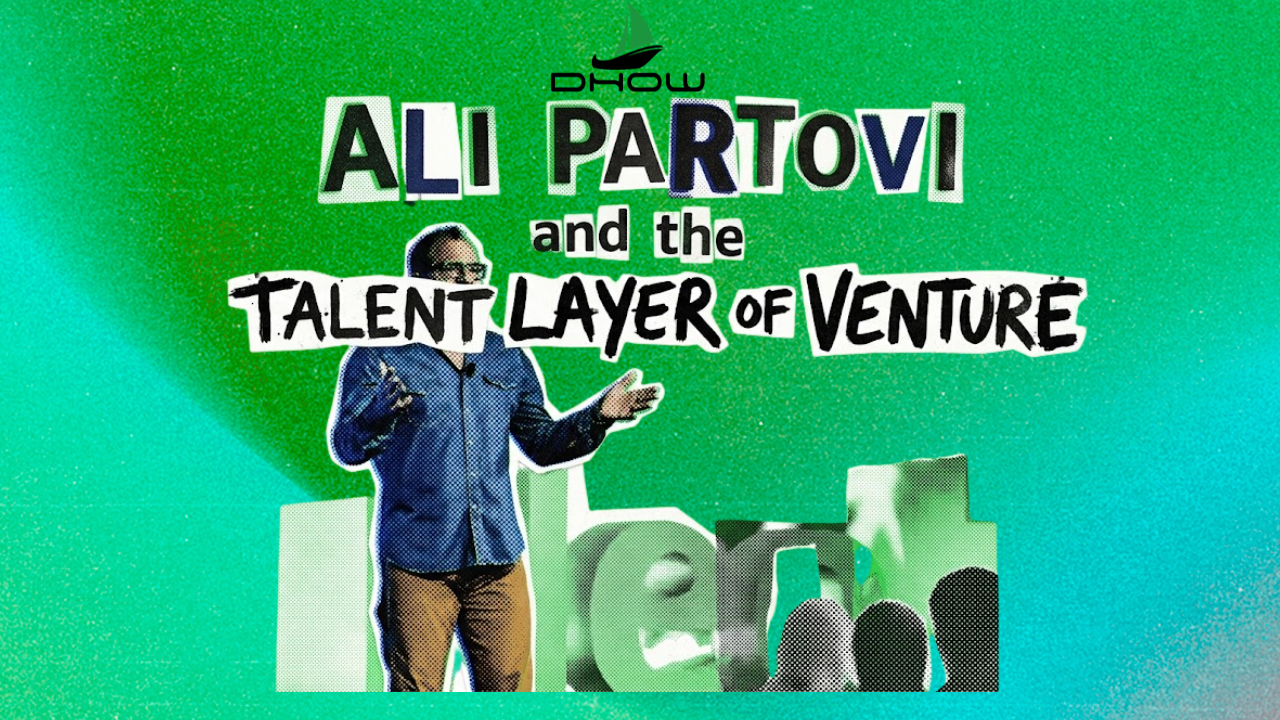
🚀 TL;DR
Ali Partovi built his edge by consistently identifying strong founders early, often before they had a company, product, or clear direction.
Neo extends that approach into a system, combining a venture fund with a talent network that backs individuals at the earliest possible stage.
The firm focuses on sourcing people rather than deals, building relationships with students and engineers before they formally enter the startup ecosystem
As company formation cycles speed up while capital moves later, the real bottleneck has shifted upstream to talent.
Neo’s model prioritizes early access over volume, positioning itself before competition forms around a round.
The broader takeaway is that early-stage investing is becoming less about picking the best companies and more about being close to the right people early enough.
What to watch: Whether more capital moves upstream toward talent, and if models like Neo can maintain their edge as that shift becomes more crowded.
🧠 Company Snapshot
Founded: 2017
Founders: Ali Partovi
Sector: Early-stage venture / talent network
Structure: Venture fund + fellowship-based talent pipeline
AUM: ~$1B+ (across multiple funds)
Focus Areas: AI, infrastructure, developer tools, high-agency technical founders
What Neo Is - Neo’s built around a simple yet non-obvious premise: the best investment opportunities do not start as companies, they start as people.
Rather than competing for deals once a company is formed, Neo identifies high-potential individuals early and builds relationships before there’s even a product or a round to price. Many of these individuals are scouted while still in school or in the earliest stages of their careers, well before they formally enter the startup ecosystem.
That positioning allows Neo to operate as both a venture fund and a sourcing engine. It invests capital at the earliest stages, often writing the first institutional check, while also maintaining a tightly curated network of engineers and operators who have a high likelihood of becoming future founders.
The result is a model that sits upstream of traditional venture. Neo positions itself at the point where companies are most likely to originate, building relationships before formation rather than reacting after the fact.
👤Founder: Ali Partovi

Born in Iran during a period of political upheaval and war, Ali Partovi’s early life was shaped by instability, education, and an unusual exposure to technology at an early age. His family eventually fled to the United States in the 1980s. By the time he was ten, he and his twin brother were already coding on a Commodore 64, drawn to software as something they could actually control in an otherwise chaotic environment.
That foundation carried forward in a very linear way. He studied computer science at Harvard, then entered the tech industry through Microsoft, where he worked on early internet products during a time when platform dynamics were beginning to take shape. He later went on to co-found LinkExchange, an early online advertising network that was later acquired by Microsoft for $265 million; this was followed by iLike, a social music platform that scaled rapidly through Facebook distribution before being acquired by MySpace.
Alongside operating, Partovi began investing. Over nearly two decades, he built one of the more quietly effective angel track records in Silicon Valley, backing companies like Facebook, Airbnb, Dropbox, and Uber at early stages. These weren’t late-stage confirmations, but early convictions on founders long before the outcomes were obvious.
In parallel, he co-founded Code.org with his twin brother, an effort that has reached tens of millions of students and pushed computer science into mainstream education. That work gave him direct visibility into a layer of the talent pipeline that most investors never see, students and early engineers before they become founders.
Across all of this, a consistent pattern emerges. Partovi has spent his career operating, investing, and building systems around one core idea: The highest leverage point in venture is not the company, or even the market; rather it’s the person, identified early enough that the rest of the market has not yet assigned value. Neo is the natural extension of that pattern.
🌍 Market Context + What Neo Actually Does
Venture has never had more capital than it does now, however capital is no longer the constraint. The bottleneck has shifted, moving upstream to talent.
Over the past decade, company formation cycles have rapidly compressed. Tools are better, distribution’s faster, and small teams can reach meaningful scale with far less capital than ever before. That shift is most visible in areas like AI, infrastructure, and developer tooling, where a handful of highly technical founders can build and ship quickly.
At the same time, traditional venture has drifted later. The combination of larger funds, higher check sizes, and increased competition have pushed many firms toward companies that are already formed, already showing traction, and overall easier to underwrite. That leaves a gap at the earliest stage, before there is a company, where the only real variable is the operator.

This is exactly where Neo thrives; they run a fellowship model designed to identify + aggregate high-potential individuals, typically students, engineers, or early operators who haven’t yet started companies but show strong signals of doing so. These individuals are brought into a curated network where they receive mentorship, exposure to other high-caliber peers, and early access to capital.
The model compounds over time. Talent attracts talent, and the network becomes both a filter and a magnet for high-agency individuals as it legitimizes its reputation. When members of that network decide to start companies, Neo is already in position to invest, often at the pre-seed stage, and frequently as the first institutional capital.
At a practical level, Neo isn’t just getting in earlier, it’s also directly and indirectly influencing where and how those companies get started in the first place.
📈 Why Neo Wins + Performance

Neo’s advantage starts with its positioning in the lifecycle. While most venture firms compete at the company level, evaluating ideas, markets, and early traction, Neo instead operates one layer earlier, where the only variable is the person. That shift changes both access and pricing.
By the time a company is raising a traditional pre-seed or seed round, multiple investors are already competing for allocation. Neo often enters before that dynamic exists, sometimes even before there is a defined idea. This generally allows for cleaner ownership, stronger alignment with founders, and less competition at entry.
The second layer of advantage comes from density. Neo identifies strong individuals and brings them together into a single, tightly connected network. That in turn creates a compounding effect where high-agency founders are more likely to interact with, learn from, and eventually build alongside other high-agency peers. Over time, the network itself becomes a filter for quality as its reputation grows and legitimizes.
Partovi’s personal track record deeply reinforces this thesis. His early investments in companies like Facebook, Airbnb, and Dropbox were made well before those companies were consensus winners. That history gives Neo credibility with the exact type of founder it’s trying to attract, which in turn improves access.
On performance, Neo’s strategy is still relatively early in its lifecycle compared to traditional venture firms; however these early signals are directionally strong. The portfolio includes companies such as Scale AI, Anysphere, and other recent investments in areas like AI infrastructure and developer tooling. The model relies on entering at formation with meaningful ownership, then selectively following on as companies mature.
Compared to peers, Neo sits in a completely different category. Accelerators like Y Combinator provide structure and early capital, but operate once a company has already formed. Seed funds compete on access and speed, just often after a round’s already in motion. Larger platforms like a16z have built talent networks, but those tend to support existing portfolio companies rather than serve as the primary sourcing engine.
Neo’s model’s narrower and more focused. It concentrates on a smaller number of individuals, builds deeper relationships, and accepts a longer time horizon before those relationships convert into companies. That tradeoff leans into depth over volume, prioritizing access at the earliest possible point, and so far, the approach appears to be working.
The idea’s straightforward: if you consistently back the right people early enough, the outcomes tend to follow.
⚠️Risks & Open Questions
Neo’s model is intuitive, however it comes with real constraints that are easy to overlook.
The first is scalability. Identifying exceptional individuals before they become founders is inherently difficult, and it’s honestly unclear how far that process can scale without diluting quality. The model depends on being highly selective, which inherently limits how much capital can be deployed without changing the strategy.
There’s also the risk of over-indexing on pedigree. Many of Neo’s fellows come from top universities or well-known technical backgrounds, which can be a strong signal but isn’t a anywhere near guarantee of execution. In fact, some of the best founders don’t follow these paths, which raises the question of whether the model systematically misses certain types of talent that could otherwise fit into its fund thesis.
Competition is another factor. Accelerators like Y Combinator, as well as larger platforms like a16z, have invested heavily in talent networks and early founder relationships. While Neo is earlier in many cases, the broader trend is clear: more capital is moving upstream, and that compresses any advantage over time.
Timing also matters. Investing before a company’s formed extends the lifecycle horizon. It can take YEARS for a relationship to turn into a company, and several more before there is any real signal on whether it’ll actually work. That kind of timeline only works if the fund is built to handle long stretches without clear feedback, and if investors are comfortable waiting before the signal shows up.
Finally, there is key-man risk. Much of Neo’s edge is tied to Ali Partovi himself, his network, his judgment, and his reputation with founders. Institutionalizing that advantage isn’t straightforward, and the durability of the model depends on how much of it can extend beyond him.
⛵ The Dhow Perspective
What Neo really shows is how early-stage investing is shifting. It’s becoming less about who has capital, and more about who gets access to the right people before everyone else catches on.
For the vast majority of venture investing’s history, the model focused on evaluating companies. Today, the highest leverage point often sits earlier, at the level of the individual. By the time a company is raising a round, competition is already priced in. The real advantage comes from being embedded where founders are initially formed.
Neo’s one version of that. It concentrates talent into a single network and builds relationships early enough that capital becomes secondary. For Dhow, the implication isn’t to replicate Neo, but rather to understand the shift. The strongest sourcing engines are increasingly community-driven, built on trust / shared values, shared identity, and consistent engagement.
That creates a whole different opportunity set. Building depth within a specific community can position you as the default partner for founders emerging from it. For us at Dhow, that means focusing on Muslim founders and investors, where alignment can translate into early access.
If you zoom out, it starts to look less like a game of picking the best deals and more like a question of who’s already in the room before those deals even take shape.
🧭 Bottom Line
If you look across Ali Partovi’s career, there’s a pretty consistent pattern. He’s been able to spot strong founders early, often well before they ever start a company, because he knows where to look and what signals actually matter.
Neo takes that pattern and systemizes it. Instead of competing at the company level, it moves one step earlier, building relationships with people who are likely to become founders and staying close enough to be the first call when they do. This positioning changes how the whole thing plays out. It becomes less about competing for deals and more about already being there before those rounds even come together.
For investors, this goes beyond just Neo. It’s really about understanding where the leverage has shifted. The firms that tend to win early aren’t just better at evaluating companies, they’re already in the mix before those companies even come together.
At Dhow, we spend a lot of time thinking about where real edge comes from in early-stage investing. What Neo makes clear is that it often shows up earlier than most people expect, not at the deal level, but at the level of the individual. By the time a company is being evaluated, a lot of the advantage has already been competed away. The more durable approach is to be closer to the source, building relationships with the people who are likely to start those companies before the rest of the market is paying attention.
That lens shapes how we think about building Dhow; not just as a platform for capital, but as a community where founders and investors connect early, with enough trust and alignment to create that same kind of access over time.
If that resonates, share this with someone who thinks about venture the same way.
Are you tracking agent views on your docs?

AI agents already outnumber human visitors to your docs — now you can track them.
88% resolved. 22% loyal. Your stack has a problem.

Those numbers aren't a CX issue — they're a design issue. Gladly's 2026 Customer Expectations Report breaks down exactly where AI-powered service loses customers, and what the architecture of loyalty-driven CX actually looks like.
If you enjoyed this, you’d be doing us a HUGE FAVOR by just clicking the ad above - we appreciate it!
Sources
Ali Partovi background, early career, and investment history
Neo firm overview, fund history, and programs
Deep dive on Neo’s model and Partovi’s background (Business Insider)
https://www.businessinsider.com/ali-partovi-trying-to-build-new-kind-of-venture-fund-2024-4
Neo fund performance and returns vs peers (WSJ)
Neo fund raise and portfolio examples (official announcement)
Neo Residency / accelerator structure and terms (TechCrunch)
Neo selectivity and positioning vs traditional pipelines (Forbes)
Code.org impact and background
Partovi network, strategy, and investing focus (VC Sheet / profile)